
How to Build a Real Estate Print Marketing Kit That Sells Listings


Five printed pieces cover a listing from the first handshake to the sold rider. Here is what each one does, the sizes and specs that matter, and the order to buy them in.
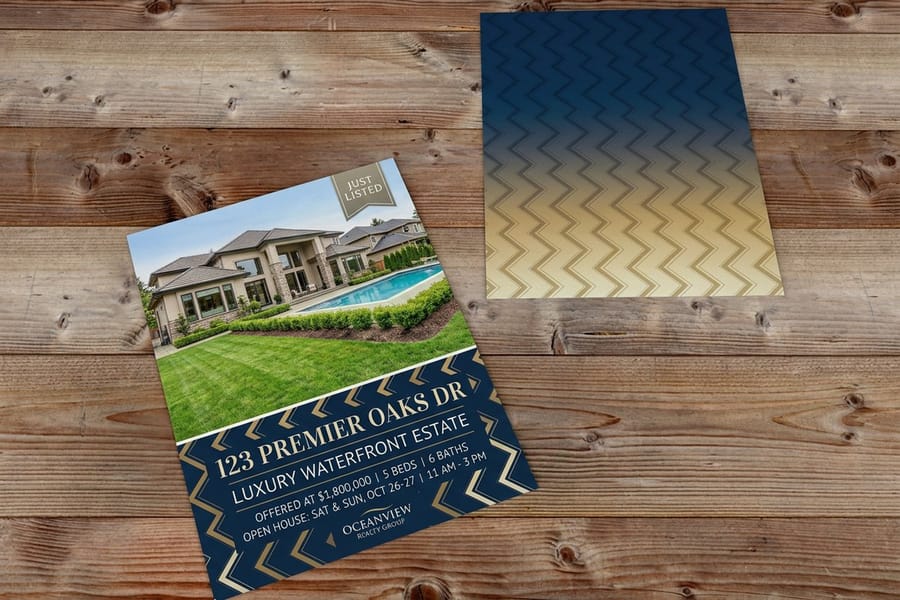
A real estate print marketing kit is five pieces: business cards, just listed postcards, a one page property flyer, a sign panel or yard sign, and the riders that swap as the listing moves. Order them in that sequence, print them in one visual identity, and size the postcard deliberately, because a card up to 4.25 by 6 inches rides the cheap USPS postcard rate while a 6.5 by 9 card is what Every Door Direct Mail requires. Everything else in a promotional catalog can wait until those five are on a reorder cycle.
Quick answer
Five pieces, one identity, bought in the right order
Cards, postcards, flyers, signs and riders are the kit. Buy business cards first, yard signs second, one large postcard run third, and flyers per listing after that. Print all of it in a single identity so a neighbor recognizes your postcard from your sign without reading it. The one spec that changes your budget more than any design choice is postcard size, because it decides whether you pay the postcard rate, the letter rate, or the flat rate that Every Door Direct Mail requires.
The Five Pieces a Listing Cannot Run Without
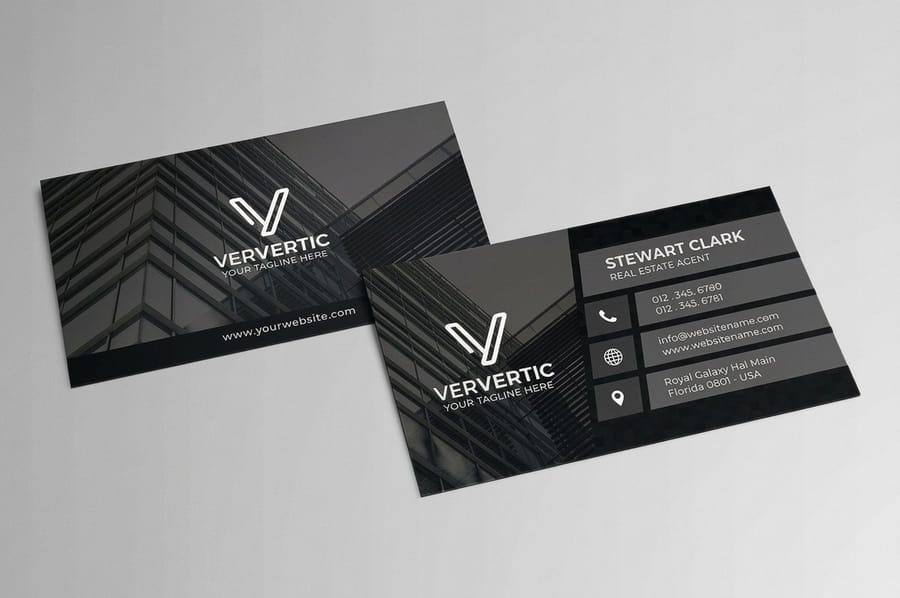
A kit is not a catalog of everything you could print. It is the smallest set of pieces that covers a listing from the first handshake to the sold rider, and it is five items long.
| Piece | The job it does | What to order | Starts at |
|---|---|---|---|
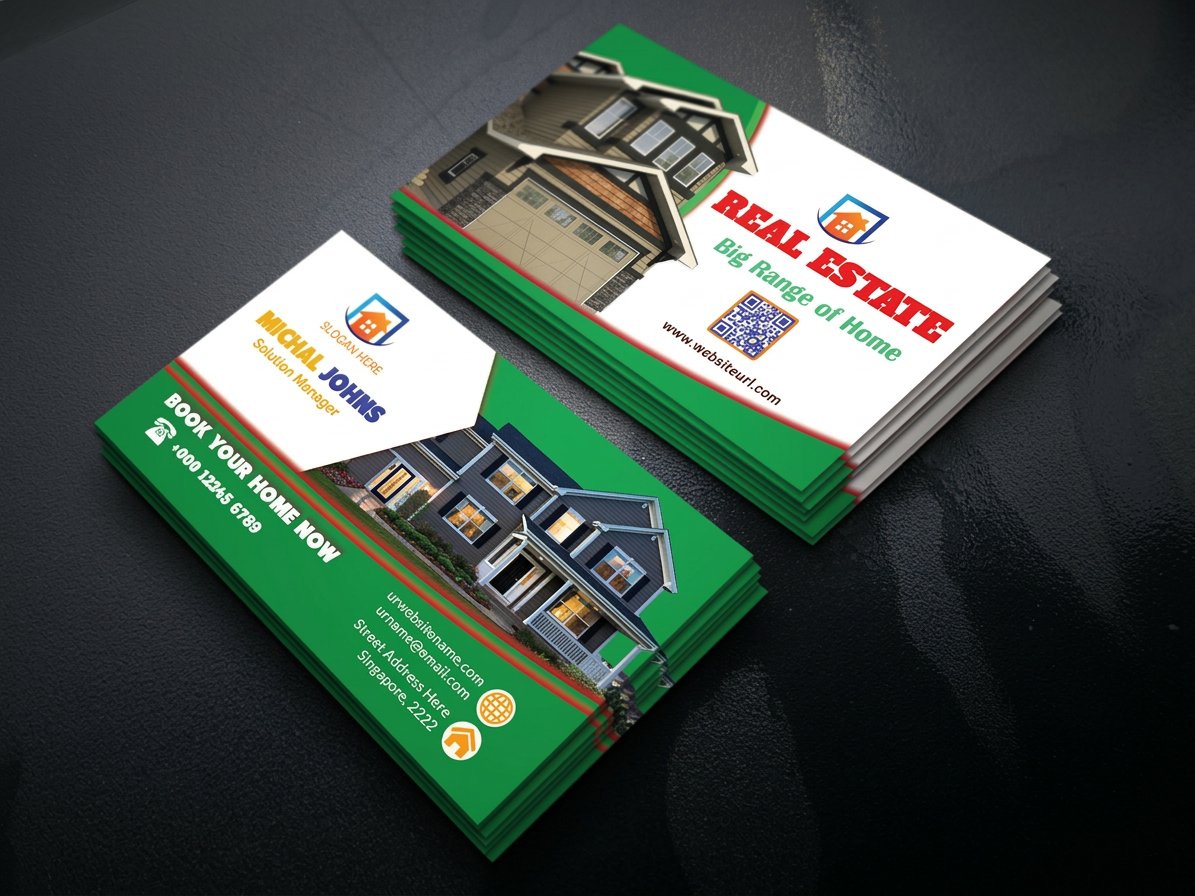
| Business cards | Introduction and follow up. The piece that ends up in a wallet after an open house. | 500 to start, 16pt so they do not soften in a pocket. | $17.57 |
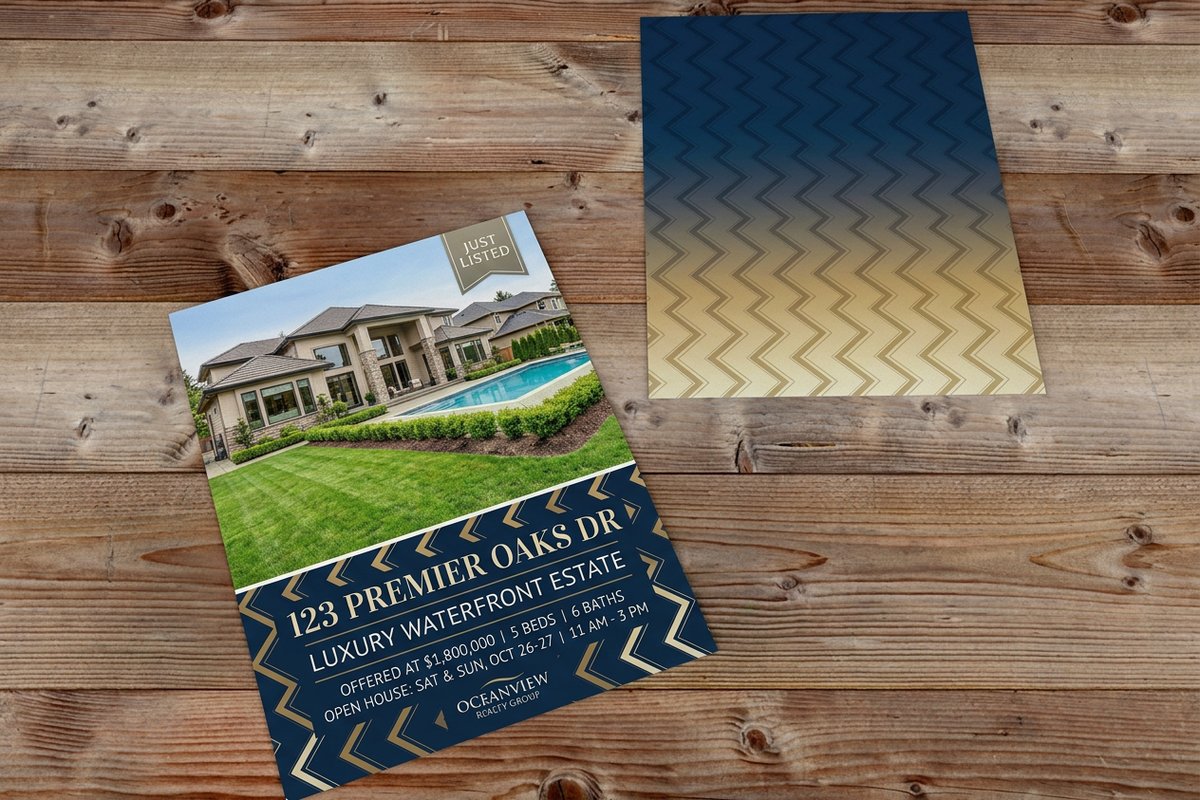
| Just listed postcards | Tells the surrounding blocks you sell here. The farming workhorse. | One large run, mailed in waves rather than printed per listing. | $16.48 |
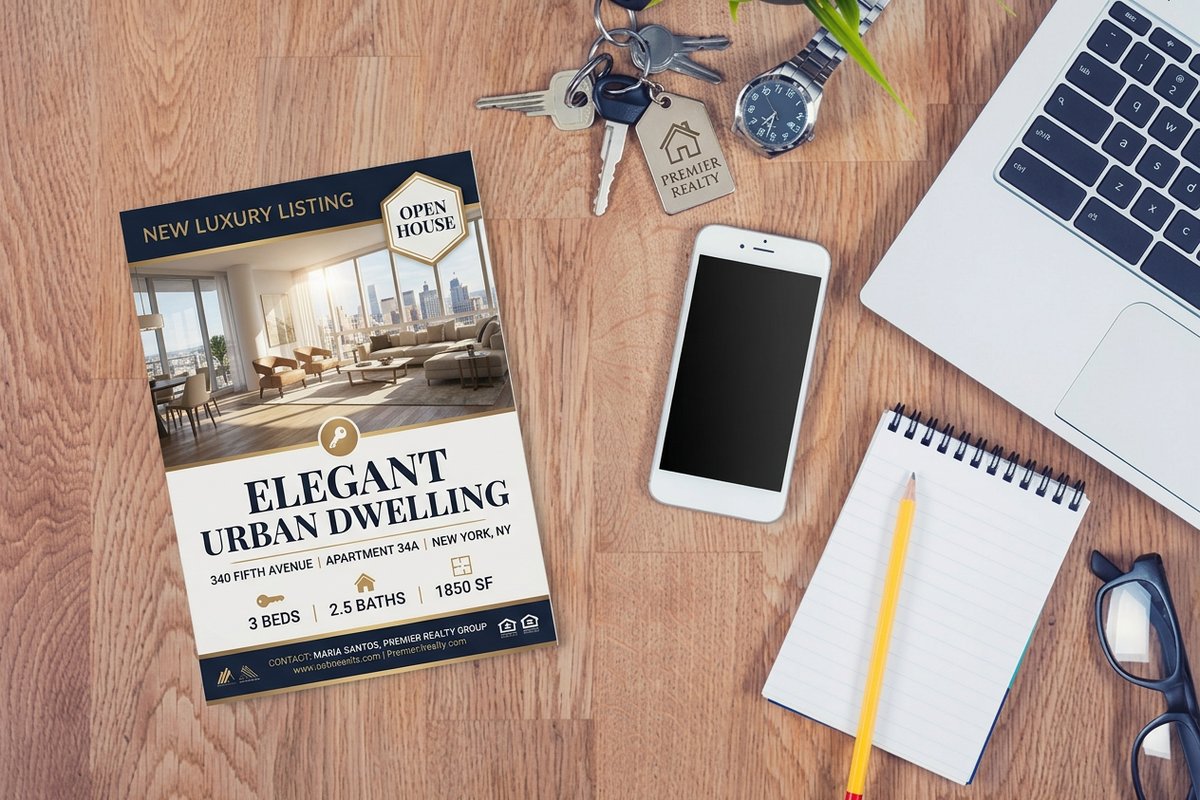
| Property flyers | Specs, photos and price in the hand of anyone who walks through or drives by. | 50 to 100 per listing on a coated sheet. | $39.54 |
| Sign panels | The printed face for a post or frame you already own. | Two per active listing, plus spares in your branding. | $25 |
| Yard signs | Complete stake and print for lawns, open houses and directionals. | Six or more, because directionals go missing. | $29.89 |
Notice what is missing. Brochures, door hangers, notepads and calendars all have a place, but none of them move a listing, and agents who start there tend to run out of budget before the sign goes in the ground. Build the five first. The real estate printing collection keeps them in one place so a reorder takes a few minutes rather than an afternoon.
One rule applies to all five: print them together, in one identity. Same logo, same brokerage lockup, same two colors, same headshot crop. A neighbor who sees your sign on Tuesday and your postcard on Friday should recognize the second from the first without reading it.
Postcards, Farming, and the Size That Sets Your Postage
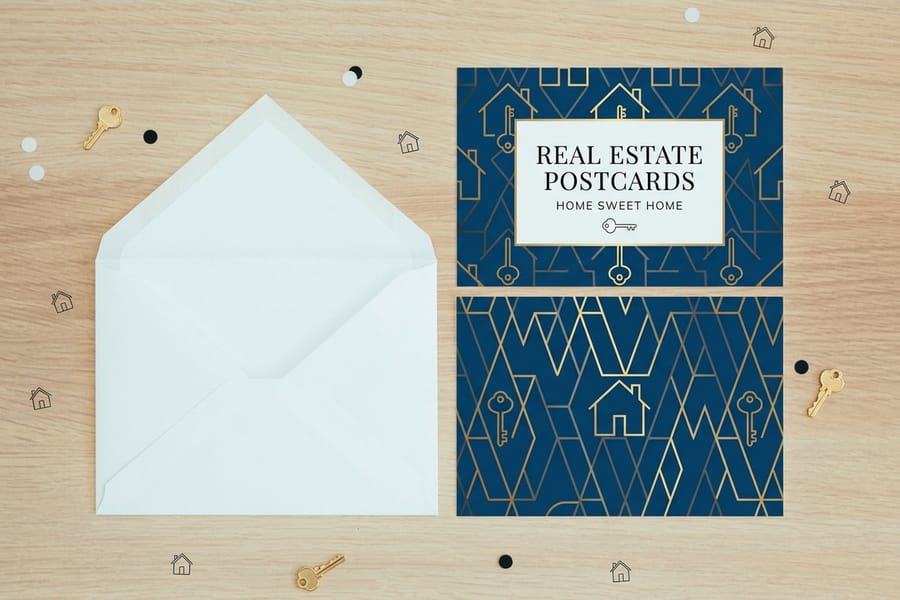
Farming a neighborhood with postcards is the oldest tactic in the kit and the one most agents abandon two mailings too early. Repetition is the mechanism. A card that arrives once is junk mail, and a card that arrives every five weeks for a year is the reason your name comes up when the family on the corner decides to sell.
Before you design anything, pick the size, because size decides postage and postage decides how many times you can afford to show up:
- Up to 4.25 by 6 inches. Stays inside the USPS postcard rate, the cheapest per touch. This is the size to use when the plan is twelve mailings, not one.
- 6 by 9 inches. Billed at the letter rate. It costs more per piece but is genuinely harder to ignore in a fistful of mail, so it suits the just sold card that carries a real number.
- 6.5 by 9 or 6.5 by 12 inches. Large enough to qualify as a flat, which is what Every Door Direct Mail requires. EDDM lets you buy an entire carrier route with no mailing list at all, which is the fastest way to blanket a farm you have no data on.
The trade off is honest: EDDM is cheap per household and completely untargeted, so you pay to reach renters and recent buyers alongside your actual prospects. A purchased owner list costs more per name and wastes less. Most agents run both, using EDDM to introduce themselves to a new farm and an owner list for the repeat cadence.
Two setup details save reprints. Keep the bottom right of the address side clear for the indicia and the barcode scan area, and keep live text at least an eighth of an inch inside the trim so a normal cutting tolerance never clips a phone number. If your farm is investor heavy rather than owner occupied, the angles in absentee owner postcards that win listings and we buy houses postcard ideas are a better starting point than a generic just listed layout, and yellow letters explain when a plain envelope beats a glossy card outright.
Signs: Panel or Stake, and the Letter Height That Decides Everything

The sign is the only piece of the kit working at two in the morning, and it is the piece most often designed on a screen at 400 percent zoom by someone who forgets it will be read from a car doing 25 miles an hour.
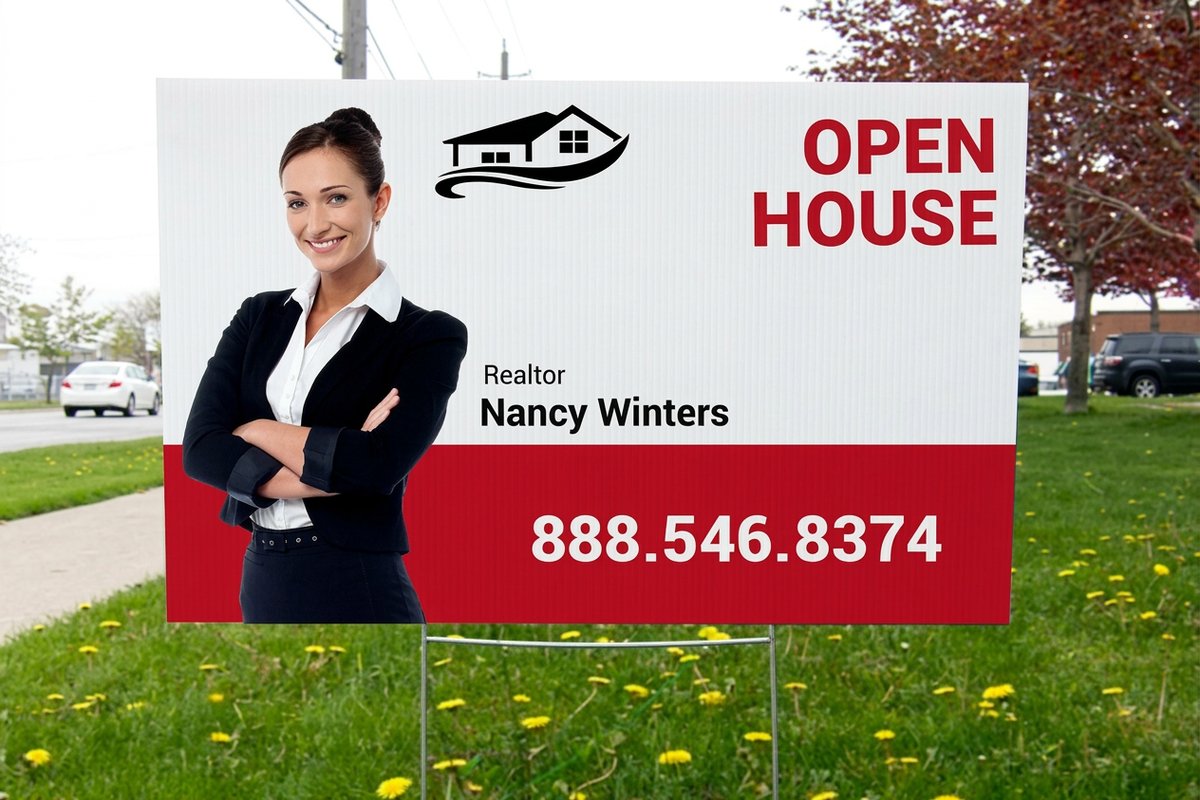
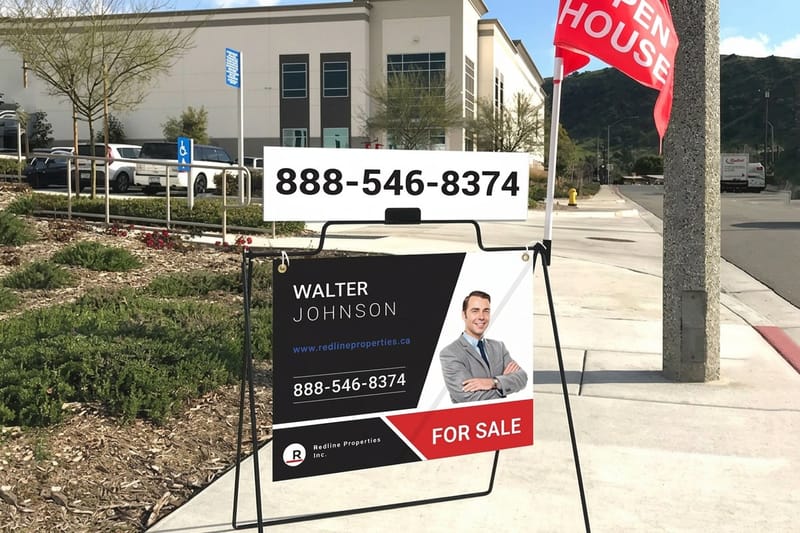
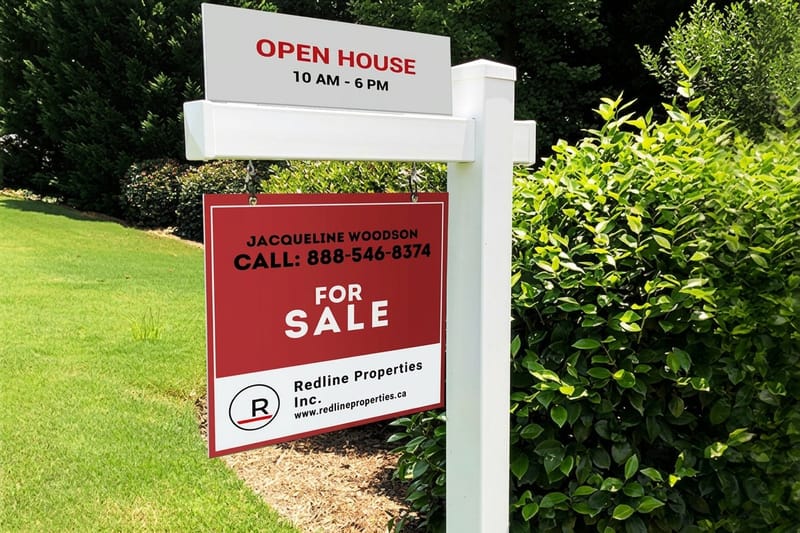
Start with the format. A real estate sign panel is the printed face alone, sized to drop into a hanging post or frame you already own. Panels look more established, survive weather better, and let you replace only the print when your brokerage rebrands. A real estate yard sign is the complete unit, print plus stake, that goes in the lawn in ten seconds and comes out the same way. Stake signs are the right call for open house directionals, where the honest planning assumption is that you will not get them all back.
Then size the type. The working rule for outdoor signage is roughly one inch of capital letter height per ten feet of reading distance. A lawn sign read from the street at thirty feet needs three inch characters for its most important line, which in practice means one phone number or one short web address gets to be big and everything else gets smaller. An agent name, a brokerage name, a phone number, a website, a QR code and a headshot on one 18 by 24 panel all end up too small to read, which is the same as printing nothing.
Two limits worth knowing before you order in quantity. First, most state real estate commissions require the brokerage name on advertising including signs, and several require it to be at least as prominent as the agent name, so confirm your state rule before a run of 25. Second, HOAs and municipalities cap sign dimensions and placement more often than agents expect, and a sign that violates the rule gets pulled by someone else. Real estate sign sizes explained lists the standard dimensions, and the complete signage guide covers riders, frames and directionals in full.
What to Order First, and What to Skip Until Later
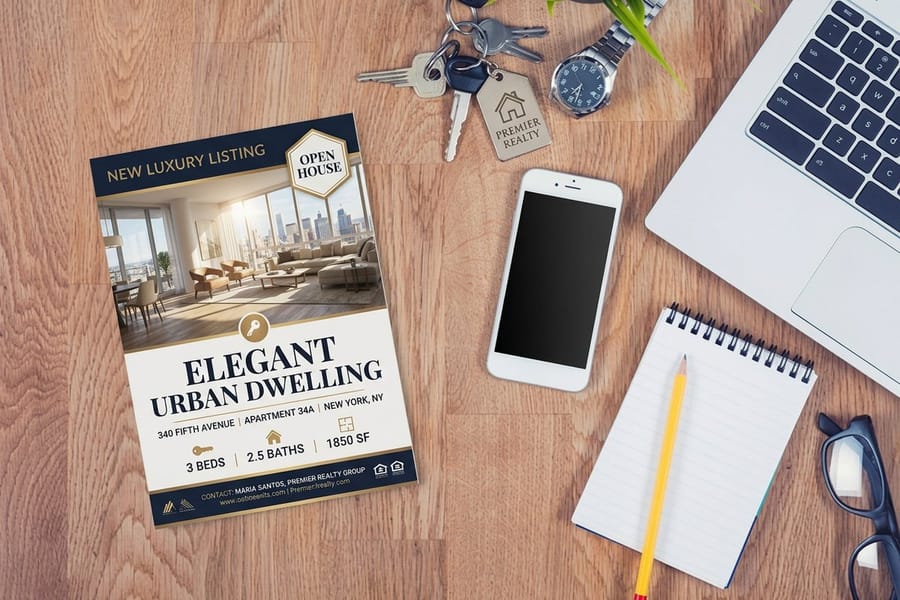
If you are building the kit from nothing, order in this sequence: business cards, then yard signs, then one postcard run, then flyers per listing. Cards come first because you need them the week you get licensed. Signs come second because a listing without one is invisible. Postcards come third because farming is a six month commitment you should not start until the first two are handled.
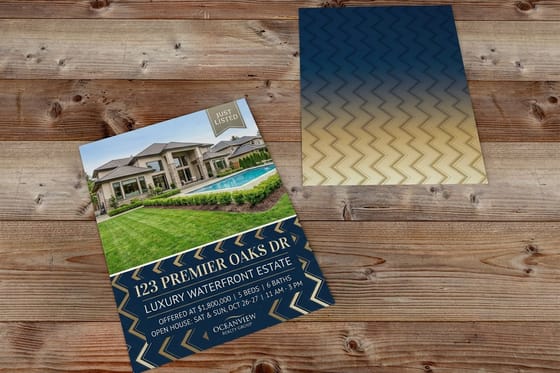
Flyers are per listing by nature, so print them last and print them right. A one page sheet with four photographs, the price, the square footage, the beds and baths, the school district and a QR code to the listing covers what a walkthrough visitor actually asks. Use a coated 100 lb text so it survives a week in a curbside box, and reprint the moment the price changes rather than crossing out a number by hand.
Skip, for now: branded notepads, calendars, magnets and anything else that shows up in a promotional catalog. They are fine once the five core pieces are on a reorder cycle and your farm is receiving mail on schedule, and they are a distraction before that. The one early exception is a presentation kit if you are already taking listing appointments, because that is the moment a folder of printed material genuinely changes the outcome.
For the strategy behind the print, marketing yourself as a new agent covers the first ninety days, and real estate investor marketing takes the same kit in a different direction when your buyers are investors rather than families. Seasonal cards keep a farm warm between listings, and 4th of July postcards is a working example of what that looks like. The full range sits in the real estate printing collection, and the wider marketing strategy guides hub covers the campaigns these pieces feed.
Wally builds the listing kit
Cards, postcards, flyers, a sign, and the rider that finishes the job
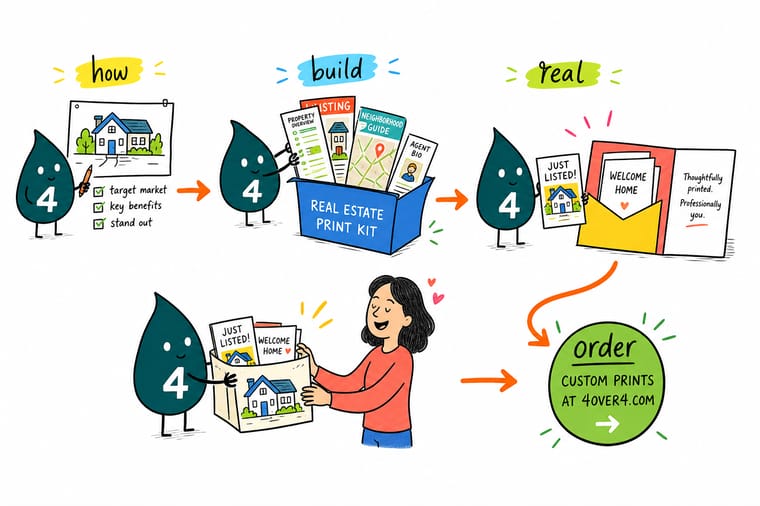
Wally does it in order. Cards first, because you need them the week you are licensed. A yard sign next, because a listing nobody can see from the street is a listing nobody calls about. Then one big postcard run, mailed in waves to the same 200 homes for six months rather than once and forgotten. Flyers last, printed per listing on a coated sheet so the curbside box does not turn them to pulp. He sets the phone number three inches tall on the sign and leaves the bottom right of the postcard clear for the barcode, which is the difference between a print job that works and one you reorder.
Shop real estate printing →Specs and pricing
Sizes, stocks and starting prices for the core three
Configure the pieces you will reorder most, with live size, stock and quantity options and starting prices straight from the 4OVER4.COM configurator.
Print it
Build the kit one piece at a time
Explore more
Where to go next

By the numbers
Real estate printing you can count on at 4OVER4
Common Questions
Your kit questions, answered
What goes in a real estate print marketing kit?
Five pieces do the real work: business cards for introductions, just listed and just sold postcards for the surrounding blocks, a one page property flyer for showings and the curbside box, a yard sign for the lawn, and riders that swap as the listing moves from open house to under contract to sold. Add a presentation folder once you are taking listing appointments regularly, and printed envelopes with a return address once you are mailing handwritten notes. Start with the five, because they are the ones a listing cannot run without.
How many just listed postcards should I mail per listing?
The common farm radius is the 100 to 250 homes closest to the property, and the reason is practical rather than magical: those are the neighbors who will be asked about the block by their own friends, and the ones most likely to move next. Print in one run rather than per listing. A single order of 1,000 real estate postcards at $16.48 per batch pricing costs far less than four separate orders of 250, and it means you are never waiting on a print job while a listing is fresh.
What size should a real estate postcard be for mailing?
It depends on which postage lane you want. Up to 4.25 by 6 inches keeps the card inside the USPS postcard rate, the cheapest way to touch a farm repeatedly. A 6 by 9 card is billed at the letter rate but stands out in a stack of bills. If you want Every Door Direct Mail, where you buy a whole carrier route and skip the mailing list entirely, the piece has to qualify as a flat, so 6.5 by 9 or 6.5 by 12 is the usual choice. Whatever the size, leave the bottom right of the address side clear for the indicia and the barcode scan zone.
What is the difference between a real estate sign and a yard sign?
A real estate sign panel is the rigid printed face that hangs in a post or frame you already own, so you replace only the panel when your branding or brokerage changes. A yard sign is the complete stake and print unit, usually corrugated plastic with an H stake, that you push into the lawn and pull out at closing. Panels last longer and look better on a hanging post. Stake signs cost less, travel flat in a trunk, and are the practical choice for open house directionals you expect to lose a few of.
How do I keep flyers from turning to mush in a curbside box?
Print them on a coated sheet. A 100 lb gloss text flyer shrugs off the humidity inside a brochure box for a week or more, while a 70 lb uncoated sheet goes wavy after one damp morning and reads as an afterthought. Refill the box on every showing visit rather than stuffing it full once, because a box crammed with 60 flyers will not release them cleanly and the top sheet takes all the sun.
What does a starter kit cost to print?
At 4OVER4.COM the five core pieces start at $17.57 for real estate business cards, $16.48 for real estate postcards, $39.54 for real estate flyers, $25 for real estate sign panels, and $29.89 for real estate yard signs. A realistic first order is cards plus one postcard run plus two yard signs, and you add flyers per listing. Order the postcards in the largest run your farm plan justifies, because the per piece price falls sharply with quantity and the artwork is the same either way.
Get Started
Ready to put the kit together?
Start with cards and a yard sign, add a postcard run for your farm, and print flyers per listing. Same identity across all five, shipped from our Queens plant.
Legal Disclaimer
Gold Standard guarantees apply to all standard orders placed through 4over4.com. Price match requires verifiable proof of a competitor's published price for an equivalent product with matching specifications and turnaround time. Satisfaction guarantee covers manufacturing defects and print quality issues. Contact support with order number and documentation. On-time delivery rate based on tracked orders 1999 to 2026. Individual results may vary based on shipping carrier performance.
