
Sticker Sheet Printing Sizes and Layout, Explained for Print


A sticker sheet packs many peelable stickers onto one backing. Here are the standard sticker sizes from 1 by 1 up to 6 by 6 inches, how to pick the sheet size, lay out kiss-cut shapes, and fit the most stickers per sheet without crowding.
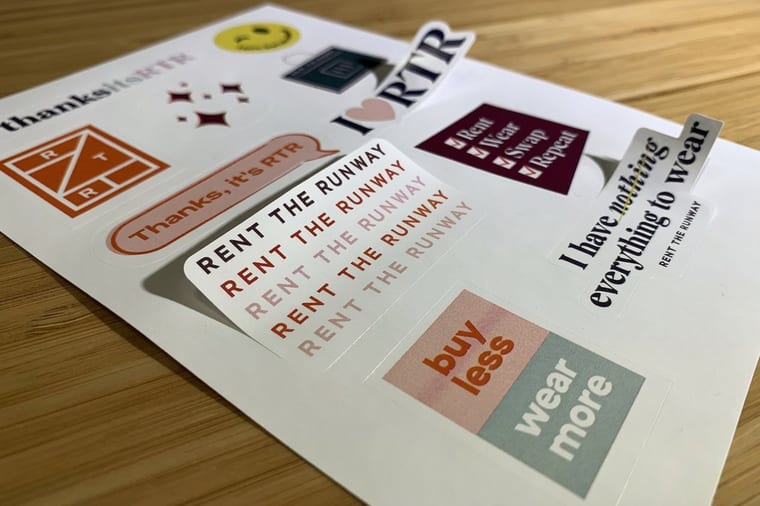
A sticker sheet is one printed backing sheet holding multiple kiss-cut stickers that peel off individually. Standard sticker sizes run from 1 by 1 inch up to 6 by 6 inches, with 2 by 2 and 3 by 3 the most ordered, and sheet sizes run from 4 by 6 inches up to letter size at 8.5 by 11 inches. Lay your shapes out with even gaps and a small margin, keep each sticker inside the safe area, and use kiss-cut so the sticker peels while the backing stays intact.
Start here
Sticker sheets in one paragraph
A sticker sheet is one backing sheet carrying multiple kiss-cut stickers. Choose a sheet size from 4 by 6 inches up to letter, lay your shapes out with even gaps and a small outer margin, keep art inside a safe area away from each cut line, and use kiss-cut so stickers peel while the sheet stays whole. Fit more per sheet and the cost per sticker drops.
What a sticker sheet is and when to use one
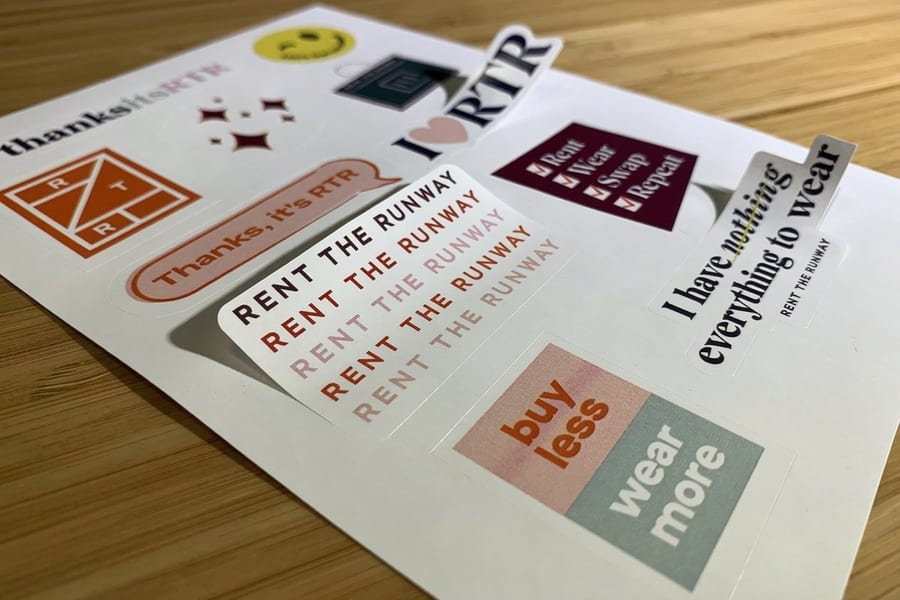
A sticker sheet is a single printed backing that holds several stickers at once, each one cut so it peels away on its own. It is the format you reach for when you want a set: a logo plus a few icons, a range of small designs, or the same sticker repeated for handouts and packaging seals. Because everything prints and cuts together on one sheet, you pay far less per sticker than ordering the same designs as loose singles.
Sheets shine for brand kits, planner and journal packs, kids' reward sets, and product inserts that ship inside a box. If you instead want one large freestanding shape peeled from its own square backing, a die-cut sticker is the better fit. For a full comparison of the formats, see our guide on roll versus sheet versus die-cut.
Standard sticker sizes chart
Standard sticker sizes run from 1 by 1 inch up to 6 by 6 inches, and 2 by 2 and 3 by 3 are the most ordered. Circles, squares, rectangles and ovals all print at those sizes. Anything outside the range is die cut to a custom shape.
| Size | Shape it suits | Best use | Fits on an 8.5 x 11 sheet |
|---|---|---|---|
| 1 x 1 in | Circle or square | Seals, small product labels, a bare logo mark | about 48 |
| 1.5 x 1.5 in | Circle or square | Envelope seals, price marks, planner icons | about 24 |
| 2 x 2 in | Circle or square | The default laptop and water bottle sticker, packaging seals | about 12 |
| 2 x 3.5 in | Rectangle | Business card size, contact details and QR codes | about 6 |
| 3 x 3 in | Circle, square or oval | The logo sticker people actually put on things | about 6 |
| 3 x 5 in | Rectangle or oval | Jar and bottle fronts, instruction labels | about 4 |
| 4 x 4 in | Circle or square | Bold logo decals, box seals | about 4 |
| 4 x 6 in | Rectangle | Case and window decals, postcard-size art | 2 |
| 5 x 5 in | Circle, square or custom shape | Statement decals for laptop lids and toolboxes | 2 |
| 6 x 6 in | Circle, square or custom shape | Car window and storefront decals, the top of the standard range | 1 |
Those counts assume even gaps and a small outer margin, which is what a weeding blade and your fingers need. A mixed set lands between them, because different shapes never tile perfectly. If your set is all one size, order it as a sticker sheet and let the sheet carry the cost; if one design is large and freestanding, a die-cut sticker on its own backing is the cleaner buy.
Common sticker sheet sizes and what fits on them
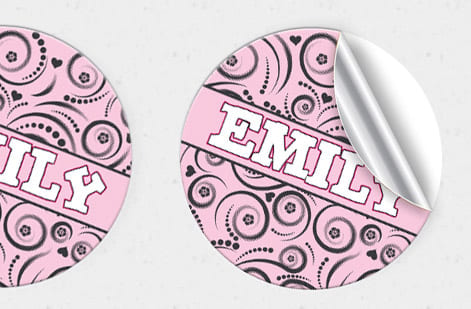
Sheet size sets your canvas. The workhorses are 4 by 6 inches for a compact set, 5.5 by 8.5 inches for a half-letter pack, and 8.5 by 11 inches for a full letter sheet that holds a large collection. Smaller sheets suit a tight brand kit or a few seals, while a letter sheet is ideal for planner packs and variety sets with a dozen or more shapes.
Pick the sheet size around your set, not the other way around. Count your designs and their rough sizes, then choose the smallest sheet that fits them with breathing room. Ordering one well-filled letter sheet almost always beats two crowded small sheets on both price and looks, and you can preview any arrangement in our online design tool before you commit.
Kiss-cut versus die-cut on a sheet
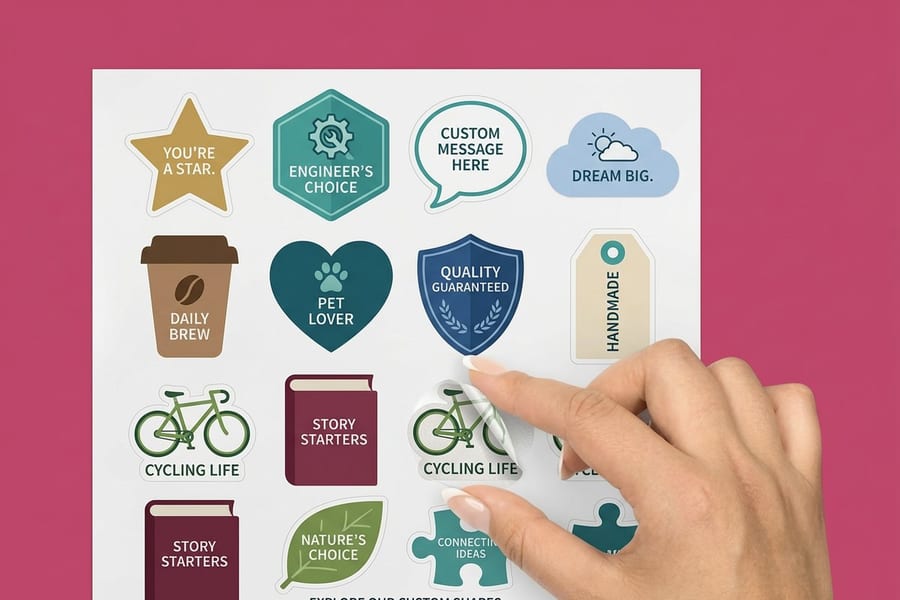
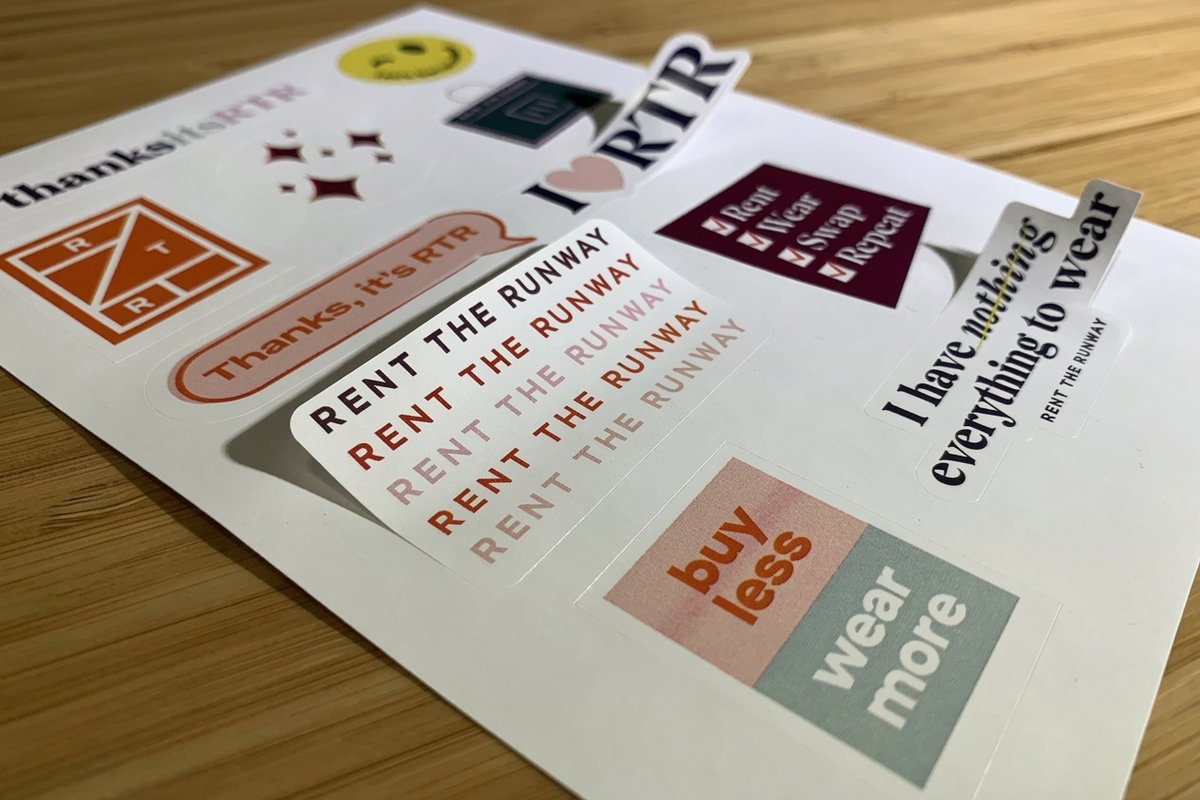
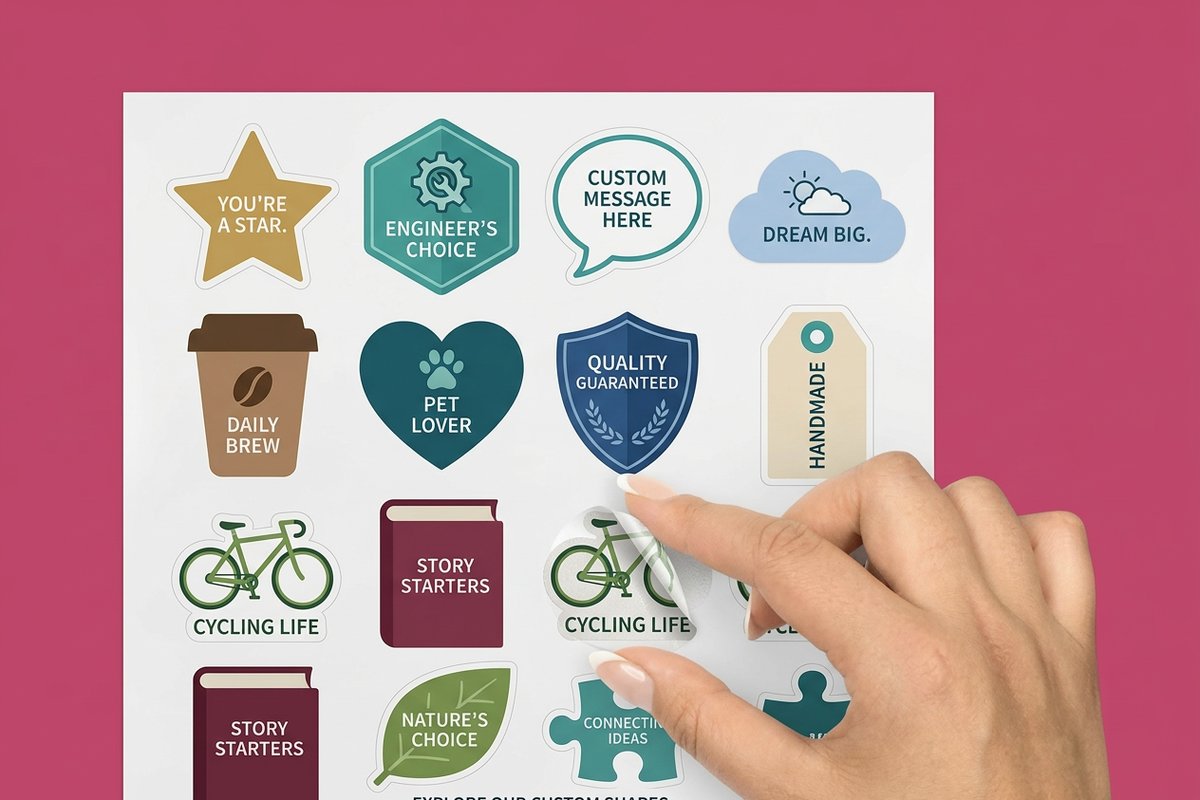
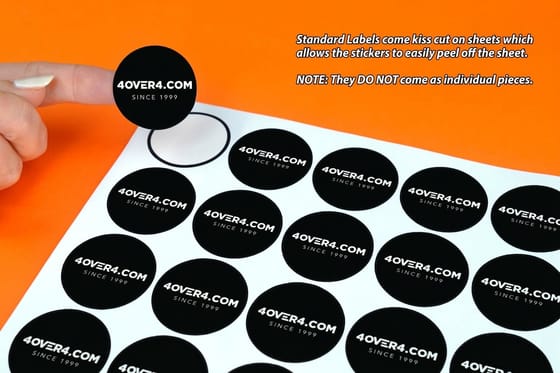
Kiss-cut is the heart of a sticker sheet. The cutting blade slices through the printed vinyl but stops at the paper backing, so the outline is there without separating the sticker from the sheet. That is what lets you fan a sheet of many stickers around and peel them one at a time, leaving a clean flat backing behind.
A full die-cut, by contrast, cuts all the way through both layers, which is right for a single freestanding sticker but would turn a sheet into loose confetti. On a sheet you almost always want kiss-cut for the individual shapes, sometimes with a die-cut around the whole sheet edge for a tidy finish. For the mechanics of the cut itself, our guide on die-cutting explained goes deeper.
How many stickers fit per sheet
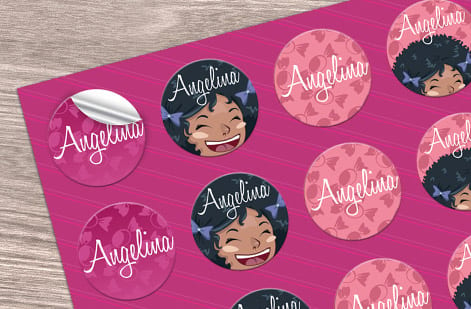
The count depends on your sticker sizes and how tightly you nest them. As a rough guide, a letter sheet comfortably holds a dozen or more stickers around 1.5 to 2 inches, or a handful of larger 3 inch shapes, plus the gaps between them. Mixed sets nest well when you rotate and stagger shapes so small stickers tuck into the spaces around big ones.
Density is money: the more stickers you fit per sheet without crowding, the lower your cost per sticker. The limit is peelability. Cram shapes edge to edge and they become hard to lift and easy to tear at the cut. Leave enough gap for a fingernail and a weeding blade, and you keep both the savings and the clean peel. Our tips on designing sticker sheets cover nesting in more detail.
Setting up your sheet file for a clean cut

A sheet file needs three things beyond your artwork: a cut path for each sticker, a bleed where color runs to a cut edge, and a safe margin that keeps important detail away from the blade. Build each sticker's art to fill its shape, extend any background slightly past the kiss-cut line so a small blade shift never leaves a white sliver, and pull text and logos inward so nothing sits right on the cut.
Keep an even outer margin around the whole sheet so the die-cut sheet edge has room, and space the stickers evenly so the cut lines never touch. Export a flattened, print-ready file in CMYK at 300 DPI. If you are laying it out from scratch, the online designer handles cut lines and spacing for you, or you can drop a finished file straight into the sticker sheet configurator.
Choosing a finish and ordering your sheets
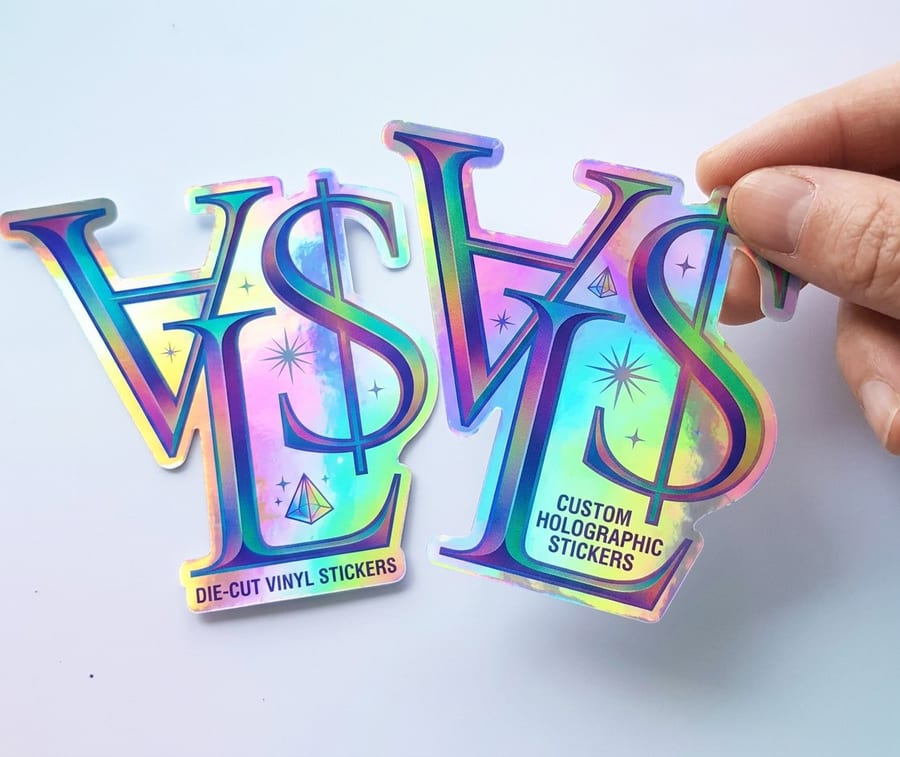
With the layout set, the last calls are material and finish. A durable vinyl with a gloss or matte laminate handles laptops, water bottles, and outdoor use, while a paper stock suits indoor packaging seals and planner packs. Specialty looks like clear or holographic add shine when the sheet is part of a premium unboxing. Each option changes the feel and the price, so it is worth a quick sample if the sheet is new to you.
From there, pick your sheet size and quantity in the configurator and the price updates live, dropping per sheet as the quantity climbs. Browse the full range in stickers, or start your set on the sticker sheets product page and watch your layout come together.
Wally fits the whole set on one clean sheet
Kiss-cut peels, the backing stays flat
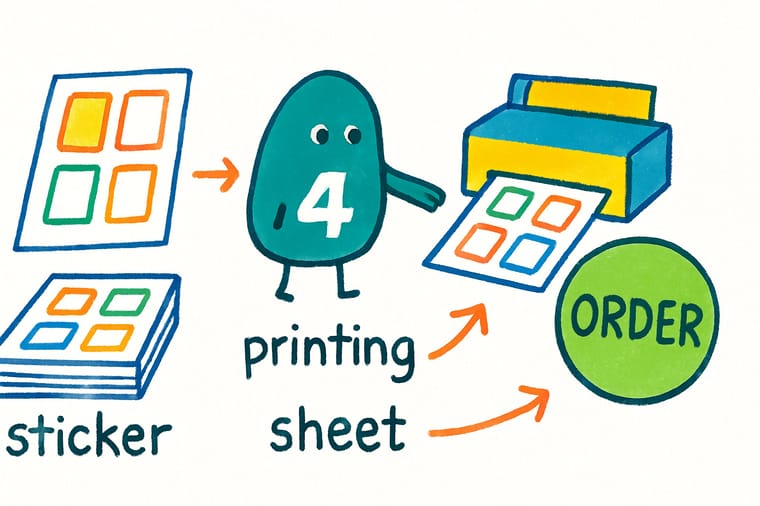
Wally nests your stickers with even gaps, gives each one a kiss-cut path, and keeps a tidy margin around the sheet so every shape peels clean. Pack more per sheet and the cost per sticker drops. Pick a size, choose vinyl or paper, and let 4OVER4 print and cut your sheet exactly as you laid it out.
Order custom sticker sheets →Quick reference
Standard sticker sheet sizes at a glance
Choose the sheet size that fits your set with room to peel. These are the common sizes and what each one tends to hold.
| Sheet size | Dimensions | Typical use |
|---|---|---|
| Compact | 4 x 6 in | A small brand kit, a few seals, or a tight icon set. |
| Half letter | 5.5 x 8.5 in | A mid-size pack of eight to a dozen small stickers. |
| Letter | 8.5 x 11 in | A large variety set or planner pack with a dozen or more shapes. |
| Safe margin | 0.125 in inside each cut | Keeps text and logos clear of the kiss-cut blade. |
| Bleed | 0.0625 to 0.125 in past each cut | Stops white slivers when color runs to a sticker edge. |
| Gap between stickers | 0.1 in or more | Leaves room for a clean peel and a weeding blade. |
Step by step
Lay out a sticker sheet in 6 steps
- List your stickers Gather every design that will live on the sheet and note its rough size so you can plan the fit.
- Pick the sheet size Choose the smallest standard sheet that holds your set with breathing room, from 4 by 6 up to letter.
- Arrange with even gaps Nest shapes with consistent spacing and a small outer margin, rotating small stickers into the spaces around big ones.
- Add cut lines and bleed Give each sticker a kiss-cut path, extend background past the cut, and pull text into the safe area.
- Export a print-ready file Flatten to CMYK at 300 DPI with the cut lines included so the sheet prints and cuts as drawn.
- Choose finish and order Select vinyl or paper and a gloss, matte, or specialty laminate, set your quantity, and place the order.
Specs and pricing
Live sticker sheet specs and pricing
Once your layout is set, size, material, and quantity drive the price. Here are the live specs and price-per-sheet for sticker sheets at 4OVER4, straight from the configurator.
| Quantity | Price Per Unit | Total |
|---|---|---|
| 25 | $7.25 | $181.24 |
| 50 | $3.89 | $194.42 |
| 100 | $2.05 | $205.18 |
| 200 | $1.18 | $236.36 |
| 300 | 89.2¢ | $267.56 |
| 400 | 74.7¢ | $298.76 |
| 500 | 65.8¢ | $328.86 |
| 600 | 60.7¢ | $364.23 |
Order it
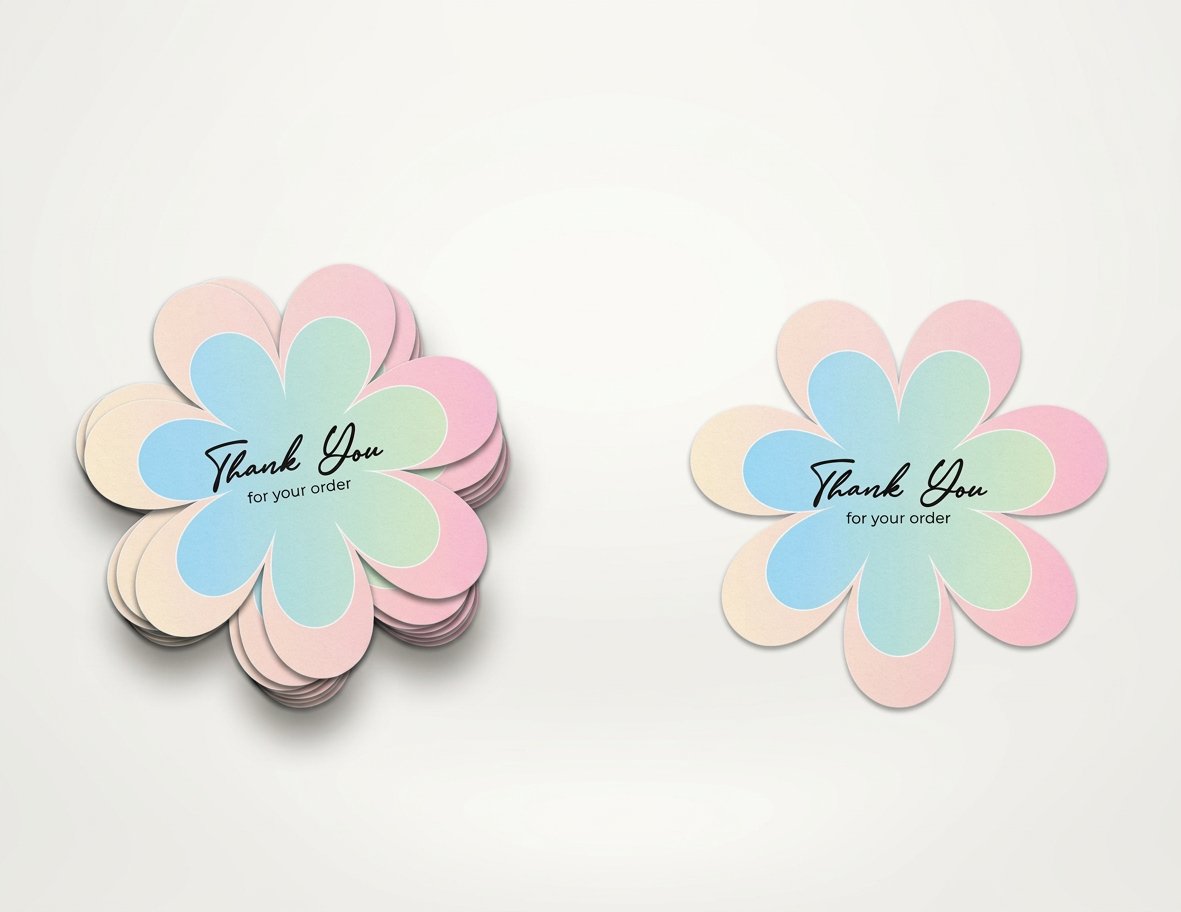
Sticker formats to match your set
See it in use
Real sticker work, printed in-house



Explore more
Where to go next



By the numbers
Sticker printing you can count on at 4OVER4
Common Questions
Common questions about sticker sheet printing
What size are stickers usually?
Most stickers people order land between 2 by 2 and 3 by 3 inches, the size that reads clearly on a laptop, a water bottle, or a box seal without taking the whole surface. The standard range runs from 1 by 1 inch for seals and small labels up to 6 by 6 inches for window and storefront decals, and circles, squares, rectangles and ovals all print at those sizes. Below 1 inch, fine detail and small type start to close up, so simplify the artwork. Above 6 inches you are into decal territory, which is cut as a custom shape rather than picked off a standard list.
How many stickers fit on one sheet?
On a letter sheet at 8.5 by 11 inches, laid out with even gaps and a small outer margin, expect roughly 48 stickers at 1 by 1 inch, 24 at 1.5 by 1.5, 12 at 2 by 2, 6 at 3 by 3, 4 at 4 by 4, and 2 at 5 by 5. A mixed set falls somewhere between those numbers, because different shapes never tile perfectly and every gap you leave is space you paid for. Since the whole sheet prints at one price, fitting more stickers on it is what lowers your cost per sticker, so arrange the set first and choose the sheet size around it.
What is sticker sheet printing?
Sticker sheet printing puts multiple stickers onto one printed backing sheet, each one kiss-cut so it peels off individually while the sheet stays intact. It is the efficient way to order a set, since all the designs print and cut together, which makes the cost per sticker much lower than buying the same designs as loose singles.
How do I choose the right sticker sheet size?
Start from your set. Count the designs and their rough sizes, then pick the smallest standard sheet that holds them with even gaps and a small margin. A 4 by 6 inch sheet suits a compact kit, 5.5 by 8.5 inches fits a mid-size pack, and a letter sheet at 8.5 by 11 inches holds a large variety set. One well-filled larger sheet usually beats two crowded small ones.
What does a sticker sheet cost and how are prices set?
Price scales with sheet size, material, finish, and quantity. Because the whole sheet prints at once, fitting more stickers per sheet lowers your cost per sticker, and the price per sheet drops as the quantity climbs. You set each option in the configurator and the total updates live, so you can see how a bigger sheet or a laminate changes the number before you order.
What sizes, stocks, and finishes are available for sticker sheets?
Sheets come in compact through letter sizes, on durable vinyl for laptops, bottles, and outdoor use or on paper for indoor seals and planner packs. Finishes include gloss and matte laminate plus specialty looks like clear and holographic. Each material and finish changes the feel and the price, so order a sample first if the stock is new to you.
How long does sticker sheet printing take to print and ship?
Standard turnaround is the most economical and lets the shop schedule your sheet efficiently. Faster options exist when you need them, but they carry an added cost for the speed. You can see the production and shipping estimate for your exact quantity in the configurator before you place the order.
What is the difference between kiss-cut and die-cut on a sheet?
Kiss-cut slices only the vinyl and leaves the backing whole, so each sticker peels off while the sheet stays flat and intact, which is what makes a sticker sheet work. A full die-cut goes through both layers, which is right for a single freestanding sticker but would separate a sheet into loose pieces. On a sheet you use kiss-cut for the shapes, sometimes with a die-cut around the whole sheet edge.
Get Started
Ready to lay out your sticker sheet?
Pick a sheet size, arrange your set with even gaps, and choose a vinyl or paper finish. Watch the price per sheet drop as your quantity climbs.
Legal Disclaimer
Gold Standard guarantees apply to all standard orders placed through 4over4.com. Price match requires verifiable proof of a competitor's published price for an equivalent product with matching specifications and turnaround time. Satisfaction guarantee covers manufacturing defects and print quality issues. Contact support with order number and documentation. On-time delivery rate based on tracked orders 1999 to 2026. Individual results may vary based on shipping carrier performance.
