
Postcard Examples That Show Exactly What Goes on Each Side


One measured 4 x 6 in card, six examples by job, and the mistakes that get a mailing surcharged. Every number here comes off a real print file.
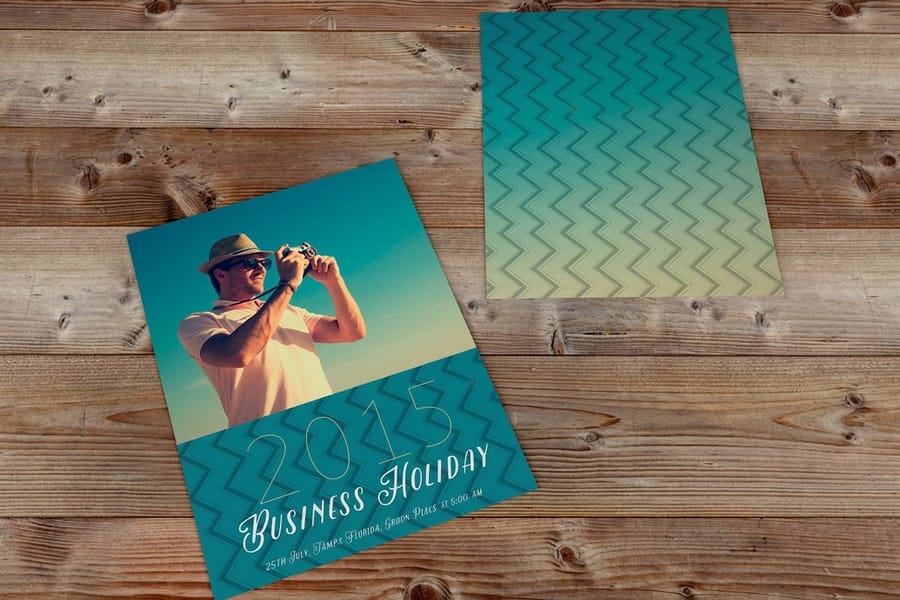
A typical postcard example is a flat 4 x 6 in card with one image and one headline on the front, and a back split down the middle: message and call to action on the left, stamp corner and address block on the right. The artwork is built at 4.25 x 6.25 in so 0.125 in trims off each edge, type stops 0.125 in inside the cut, and the bottom right 4 in by 0.625 in of the address side stays blank for the postal barcode.
Quick answer
Two sides, two jobs, and three measurements that decide both
Look at any postcard example as two separate designs printed back to back. The front spends its whole budget on one image and one headline, because it gets a glance. The back does the selling on the left half and hands the right half to the postal service. The three numbers that govern the layout are 0.125 in of bleed outside the trim, 0.125 in of safe margin inside it, and a 4 in by 0.625 in clear zone in the bottom right corner of the address side. Get those right and everything else is design.
One 4 x 6 Postcard Example, Measured on Both Sides
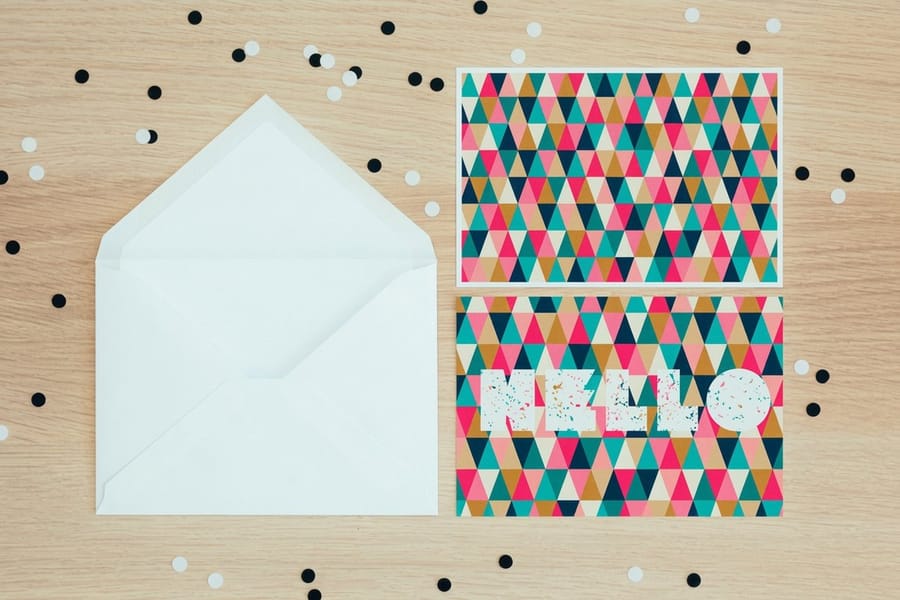
Start with the size almost every other example is measured against. A 4 x 6 in postcard is set up as a 4.25 x 6.25 in document, because 0.125 in of artwork runs off each edge and gets trimmed away. Type and logos stop 0.125 in inside the trim line, leaving a 3.75 x 5.75 in safe area. Those three numbers explain most of the print problems people run into.
The front. One image that bleeds off all four sides, one headline in a weight that reads at arm's length, and one supporting line if it genuinely adds something. A photo of the product, the property, the plate of food, or the team. Nothing in the corners, because the blade drifts a fraction from sheet to sheet and a logo tucked 0.05 in from the edge is the thing that gets clipped.
The back. Draw an imaginary line down the middle. Left half is yours: the offer, three or four lines of proof, a phone number, and a call to action set as the boldest element on the card. Right half belongs to the postal service: stamp or indicia in the top right corner, the recipient address block below it, and the bottom right 4 in wide by 0.625 in tall left completely blank so a barcode can be sprayed there. Put a colour wash across that corner and the card either gets hand sorted at a higher rate or comes back.
Count what is left. On a mailed 4 x 6 in card the message half is roughly 3 by 5.75 in of usable space, which is about the size of an index card. That constraint is the whole reason good postcard examples look sparse. If your copy will not fit inside it, the answer is a bigger card, not smaller type. Start from a correctly built file in the blank template library and the bleed, trim and safe margins are already in place.
Six Real Postcard Examples and the Job Each One Does
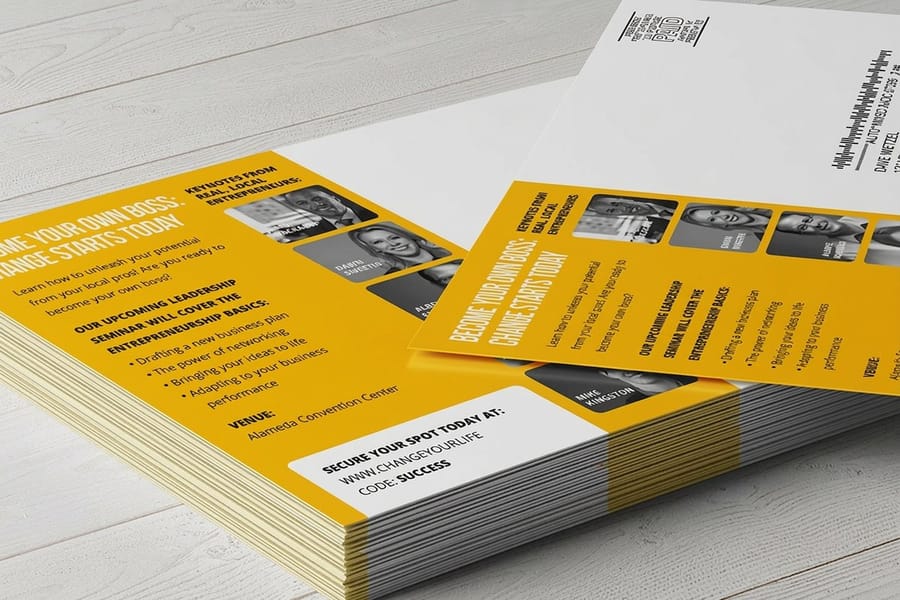
A postcard example is only good or bad relative to what it was sent to do. A just listed card and an appointment reminder look nothing alike, and both can be right. These six cover the work most cards are actually asked to do.
| Example | Size that fits | Stock and finish | The one job it does |
|---|---|---|---|
| Just listed property | 6 x 9 in | 16pt gloss | Shows one large exterior photo and a price. The neighbours are the audience, not the buyer. |
| Appointment reminder | 4 x 6 in | 14pt uncoated | Carries a date, a time and a phone number. Uncoated so the front desk can write on it. |
| Restaurant offer | 5 x 7 in | 16pt gloss | One appetising photo, one dish, one deadline on the offer so it gets used this month. |
| Save the date | 5 x 7 in | Silk or soft touch | Gets stuck to a fridge for six months, so it is judged on how it feels in the hand. |
| EDDM route drop | 6 x 11 in | 14pt gloss | Covers whole postal routes without a mailing list. Big enough to carry a map and hours. |
| Thank you card | 4 x 6 in folded | 14pt uncoated | Hides the message inside a fold so it reads as personal rather than as advertising. |
Read the last column before the first. The reminder card and the save the date are both small, both printed on light stock, and they still need opposite finishes, because one gets written on and the other gets looked at. The route drop is the odd one out: at 6 x 11 in it is a poster that happens to arrive in a mailbox, and it fits the 6.125 x 11.5 in EDDM Retail maximum, which is the whole reason that size exists. Direct mail postcards start at $89.68 with the printing and the mailing on one order, and folded postcards start at $84.36 when you need the inside panel.
The Postcard Examples That Fail, and What Went Wrong
Most cards do not fail on the front. They fail on the back, or at the post office, and the failures repeat.
- Four calls to action instead of one. Phone, website, QR code, social handles and a store address all set at the same weight. The reader picks none of them. Choose the single response you actually want and let the rest sit small.
- Artwork drifting into the barcode zone. A background photo that runs the full width of the address side looks fine on screen and gets the card surcharged or rejected. Keep the bottom right 4 in by 0.625 in white.
- Type in the trim. A phone number set 0.06 in from the edge survives on the proof and loses its last digit on a few hundred cards. Hold everything 0.125 in inside.
- Gloss on a card someone has to write on. Laminate seals the surface. Ink beads and smears. If a receptionist is filling in a date by hand, order uncoated.
- A 4 x 6 in card printed on very heavy board. The First Class postcard rate holds only while the finished card is between 0.007 in and 0.016 in thick. Push past that and the same design mails at letter rates, which is covered in the postage cost by size guide.
- No deadline. An offer with no date gets set aside and never returned to. A card with an expiry gets acted on or thrown away, and both outcomes tell you something.
The trade-off worth naming: a postcard is cheap to print and expensive to mail, so every design decision that raises the postage tier has to earn it. Going from 4 x 6 in to 6 x 9 in gives you a card people notice and moves you off postcard postage onto letter postage. Sometimes that is the right call. It is never a free one. If the card does not have to be mailed at all, compare the formats in postcards vs flyers before committing.
Stock, Finish and Size Examples With Real Starting Prices
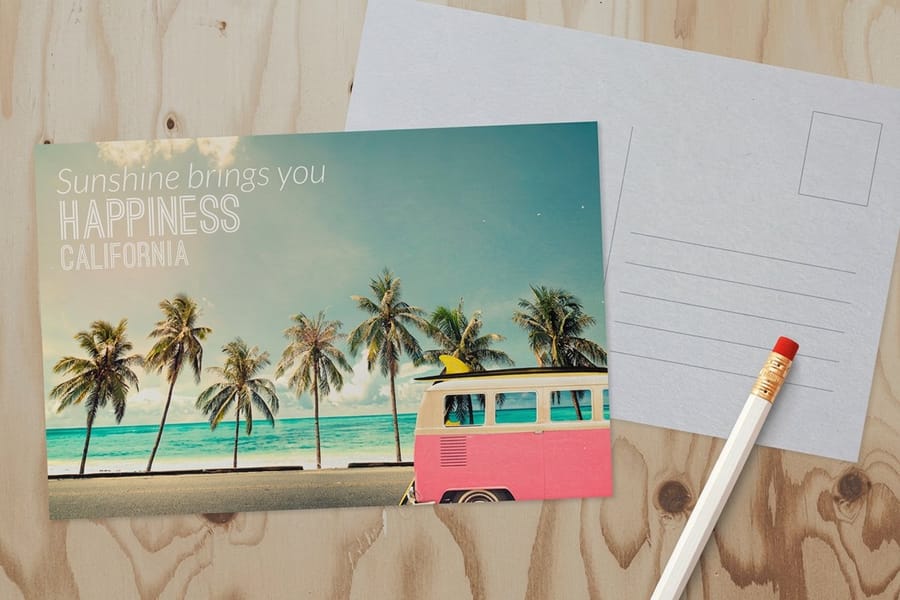
The same layout behaves differently on different board, and the price gap between the options is smaller than most people expect. Here is what each choice actually changes.
Standard, from $16.48. Standard postcards in the common sizes cover the ordinary jobs: reminders, offers, handouts. This is the baseline every other price on the page should be compared against.
Oversized, from $51.62. Oversized postcards at 6 x 9 in and 6 x 11 in exist for one reason, which is to be the biggest thing in the stack. Use them when the mailbox is crowded or when the card carries a map, a menu or a list of services.
Silk, from $74.53. Silk postcards have a smooth low sheen that photographs well and still feels substantial. They are the choice for cards people keep, like save the dates and announcement mailers.
Folded, from $84.36. Folded postcards double the printable area without doubling the footprint. The inside panel is what makes a thank you or an appointment card read as personal rather than promotional. See folded vs flat postcards for where the extra cost pays back.
Print and mail together, from $89.68. Direct mail postcards put printing, addressing and postage on one order, which removes the step where a printer ships boxes to a mail house and something goes missing between them. Full sizing, stock and finish choices sit on the postcard printing page, and the exact dimensions for each size are in the postcard sizes guide.
Wally reads a postcard the way the post office does
Front earns the glance, back earns the call
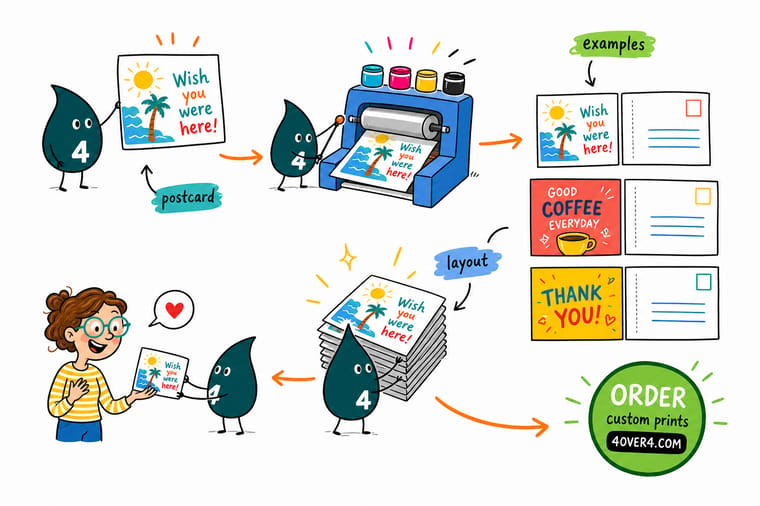
Wally flips the card over first. Left half is yours: one offer, one phone number, one bold call to action. Right half belongs to the mail: stamp in the corner, address block under it, and the bottom right strip kept white so the barcode has somewhere to land. Then he checks the edges, because art has to run 0.125 in past the trim and type has to stop 0.125 in short of it. Two numbers and a blank corner, and the card mails exactly as designed.
Print postcards at 4OVER4 →Specs and pricing
Sizes, stocks and starting prices for each example
Configure the three formats the examples on this page use, with live options and starting prices straight from the 4OVER4.COM configurator.

Print it
Order the postcard the example is built on
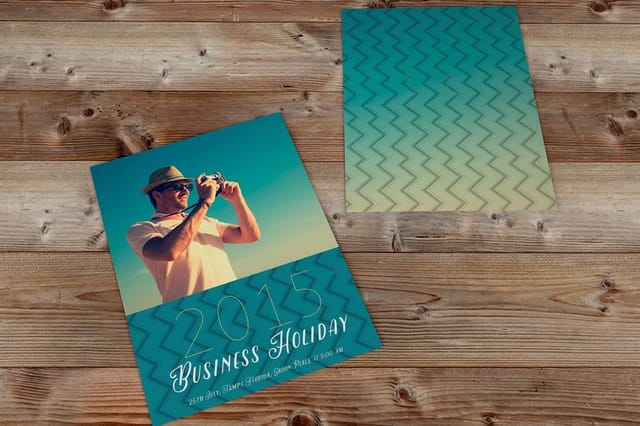
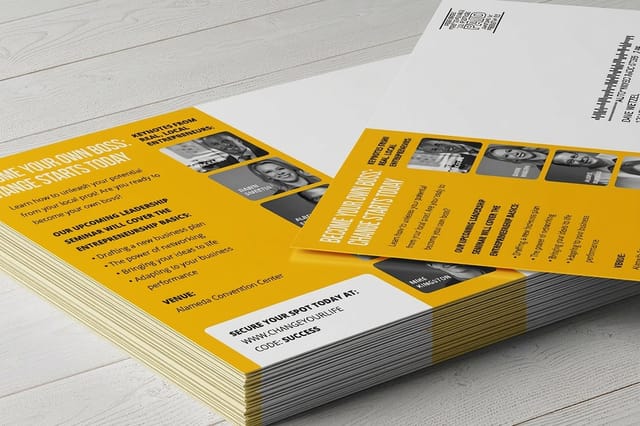
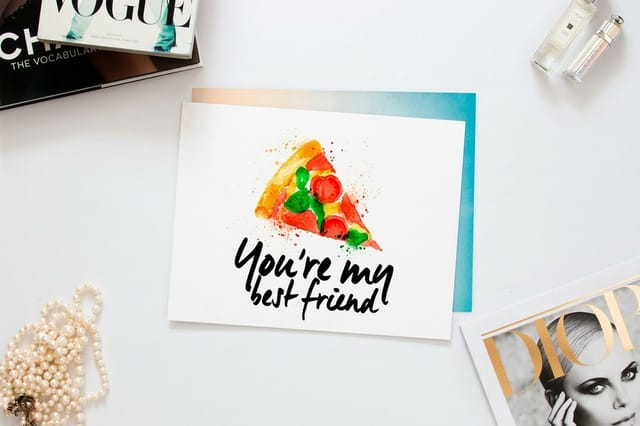
Explore more
Where to go next
By the numbers
Postcard printing you can count on at 4OVER4
Common Questions
Your postcard example questions, answered
What does a standard postcard example look like?
A flat, double sided card, most often 4 x 6 in. The front carries one dominant image and a short headline that runs to the edge of the sheet, with the artwork built 0.125 in oversize on all four sides so the blade never cuts into white. The back is divided down the middle: the message, the offer and the call to action on the left, the stamp corner and the recipient address on the right, and the bottom right 4 in by 0.625 in left blank for the postal barcode. That layout is the reference every other example is a variation of, and it is broken down piece by piece in the postcard anatomy guide.
What should go on the front of a postcard?
One image, one headline, and almost nothing else. The front is read across a kitchen counter on the way to the recycling bin, so a single photograph or illustration that fills the card beats a grid of four small ones every time. Keep the headline under about eight words, set it in a weight heavy enough to read from arm's length, and place it over a quiet part of the image rather than over detail. Logos belong on the front only if the brand is the reason someone would keep reading. Everything else, including hours, address and the fine print, moves to the back.
How is a mailing postcard example different from a handout?
A handout can use both sides freely. A mailing card gives up roughly half of one side to the postal system. Once you reserve the address block, the stamp corner and the barcode clear zone, the usable message area on a 4 x 6 in card drops to about 3 by 5.75 in, which is why so many mailed cards feel cramped compared to the same design used as a counter handout. If the copy will not fit, move up a size rather than shrinking the type. The addressing rules that drive the layout are set out in how to address a postcard for mailing.
What size postcard example works best for a mailing campaign?
4 x 6 in when the run is large and the message is short, because it holds the cheapest postage tier. 6 x 9 in when the card has to be noticed, because it sits on top of everything else pulled out of the mailbox that day and still mails inside the letter size limit. 6 x 11 in when you want to cover whole postal routes with EDDM and skip buying a list. The jump from 4 x 6 in to 6 x 9 in roughly doubles the printable area, and oversized postcards start at $51.62 against $16.48 for standard postcards.
Can I write on a printed postcard by hand?
Only on the right stock. A gloss laminated card seals the surface, so ballpoint skids and gel ink sits wet on top and smears. If someone on your team is going to hand write a note or an address, order an uncoated or silk finish and test one card with the pen you actually plan to use before the whole run goes out. The same rule applies to postal machines: heavy gloss can reflect enough to slow the sorting scan, which is one of the quiet reasons uncoated stocks stay popular for addressed mail. Stock behaviour by weight and coating is covered in the postcard paper and cardstock guide.
How many postcard examples should I test before a big run?
Two versions is usually the honest limit for a first campaign, and one variable between them. Change the offer or change the headline, not both, then print a small quantity of each and give them different phone extensions, landing pages or QR codes so you can tell which one produced the response. A split with four creatives and no tracking teaches nothing, because you cannot attribute a single call. Adding a scannable code takes ten minutes and is explained in how to add a QR code to your postcards.
Get Started
Ready to print a postcard that gets read?
Pick a size, choose a stock that suits how the card will be handled, and we print it with the bleed, the safe margin and the mail block already accounted for.
Legal Disclaimer
Gold Standard guarantees apply to all standard orders placed through 4over4.com. Price match requires verifiable proof of a competitor's published price for an equivalent product with matching specifications and turnaround time. Satisfaction guarantee covers manufacturing defects and print quality issues. Contact support with order number and documentation. On-time delivery rate based on tracked orders 1999 to 2026. Individual results may vary based on shipping carrier performance.
